
☕ The Spirit of Baščaršija: The Old Bazaar
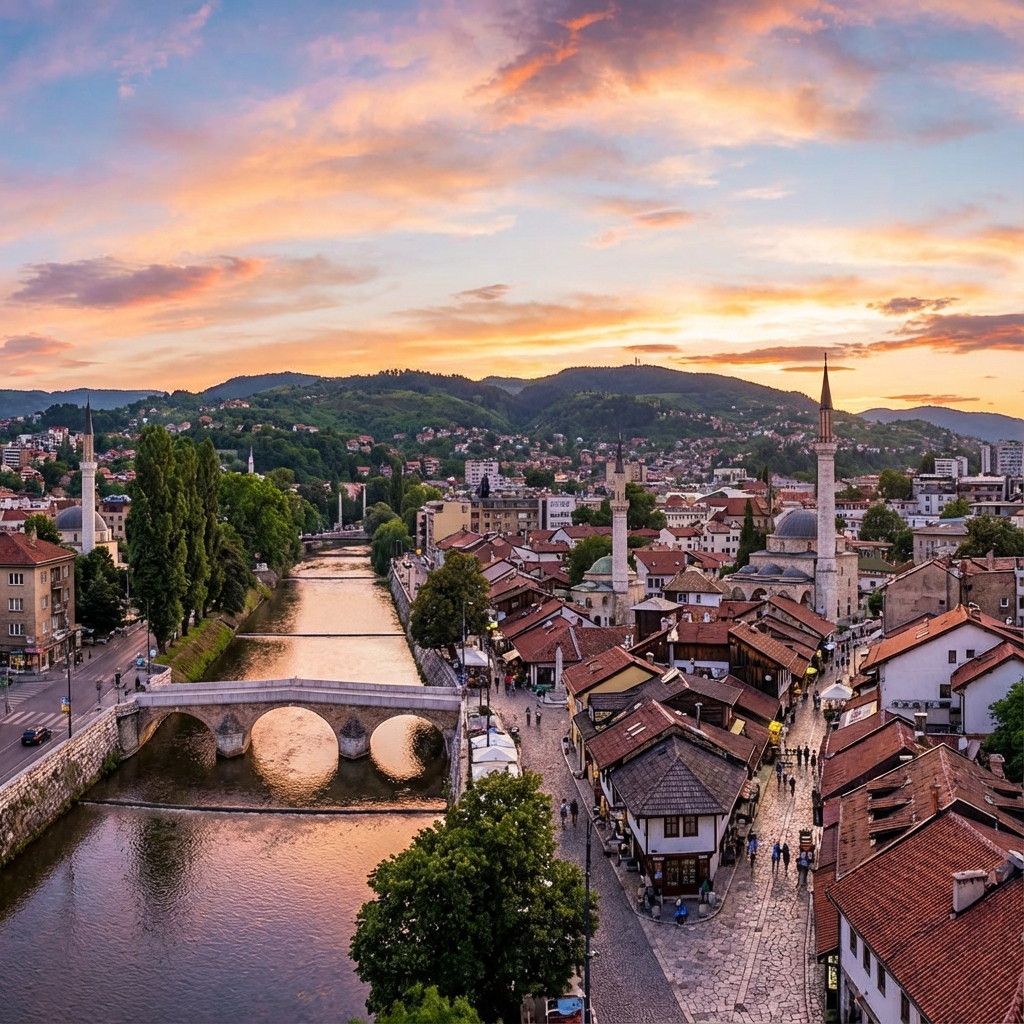
Baščaršija is the Ottoman-era core of Sarajevo and its cultural heartbeat. Walking through these cobbled streets feels like stepping back in time:
- Sebilj: The iconic wooden fountain in the center of the bazaar. It's the most photographed spot in the city. Legend says if you drink from it, you will return to Sarajevo someday. It's surrounded by pigeons, giving the square its nickname "Pigeon Square".
- Gazi Husrev-beg Mosque: A stunning example of Ottoman architecture and the center of the city's Islamic life since the 16th century. Visitors are welcome outside of prayer times. The complex also includes a madrasa (school) and a beautiful library.
- Coppersmith's Street (Kazandžiluk): This is one of the oldest streets in the bazaar. Watch artisans hammer out intricate coffee sets, plates, and souvenirs in the same way they have for centuries. The rhythmic sound of hammering is the soundtrack of this street.
- The Meeting of Cultures: Look for the marker on the ground on Ferhadija Street. Facing east, you see the Ottoman bazaar; facing west, you see the Austro-Hungarian architecture. It's a visual representation of Sarajevo's unique position between East and West.
🛡️ A Witness to History: WWI and the Siege
Sarajevo has been at the center of global events multiple times. To understand the city, visit these landmarks that tell its turbulent story:
- Latin Bridge: This modest stone bridge was the site of the assassination of Archduke Franz Ferdinand by Gavrilo Princip in 1914, the event that triggered World War I. A plaque marks the exact spot on the corner of the bridge.
- Tunnel of Hope (Tunel Spasa): A deeply moving museum located near the airport. It preserves the entrance to the 800-meter underground tunnel that was the city's only lifeline during the 1,425-day siege in the 1990s. Walking through the small section of the tunnel is a humbling experience.
- War Childhood Museum: A unique and emotional museum focusing on the experiences of children during the war, using personal objects—like a diary, a toy, or a pair of shoes—and the stories behind them. It won the Council of Europe Museum Prize in 2018.
- Gallery 11/07/95: This gallery provides a powerful and heartbreaking look at the Srebrenica massacre through photography and audio-visual exhibits. It serves as a reminder of the horrors of the Bosnian War.
- Sarajevo Roses: As you walk the city, look for "Sarajevo Roses"—scars in the concrete from mortar shell explosions that have been filled with red resin to memorialize those killed at the site.
🏔️ Mountains & Views: The Olympic Legacy
Surrounded by the Dinaric Alps, Sarajevo hosted the 1984 Winter Olympics. The mountains are an integral part of city life and offer incredible nature just minutes from the center:
- Sarajevo Cable Car (Trebevićka žičara): Take a 10-minute ride from the city center up to Mount Trebević for breathtaking panoramic views of the entire valley. It's a symbol of the city's recovery, restored to its former glory.
- Olympic Bobsleigh Track: On Mount Trebević, you can walk along the abandoned concrete track from the '84 Olympics. It's now covered in colorful graffiti and surrounded by forest, making for a unique and slightly eerie photo opportunity.
- Yellow Fortress (Žuta Tabija): The best spot for a sunset view over the red roofs of the city. It's a popular hang-out spot for locals. During Ramadan, this is where the cannon fires to mark the end of the fast, a tradition followed by a picnic with a view.
- Vrelo Bosne: Located at the foot of Mount Igman, this park is the source of the Bosna River. It's a peaceful oasis with crystal-clear springs, swans, and walking paths. You can reach it by taking a horse-drawn carriage ride through the Great Alley (Velika Aleja).
🍽️ Gastronomy Guide: A Taste of Bosnia
Bosnian cuisine is hearty, meat-heavy, and delicious. Sarajevo is the best place to indulge:
- Ćevapi: The undisputed king of Bosnian food. These are small grilled minced meat sausages served in somun (flatbread) with raw onions and kajmak (clotted cream). Head to Ćevabdžinica Željo or Hodžić in Baščaršija for the authentic experience.
- Burek & Pita: Savory pies made with thin phyllo dough. Remember the rule: "Burek" is only with meat. If it's with cheese, it's "Sirnica"; with spinach, "Zeljanica"; with potato, "Krompiruša". *Buregdžinica Bosna* serves some of the best.
- Klepe: Bosnian dumplings (often called Bosnian ravioli) stuffed with meat and served with a garlic-yogurt sauce. Try them at *Dženita*, a cozy restaurant hidden in the old town.
- Bosnian Coffee (Bosanska Kafa): More than a drink, it's a social ritual. It's similar to Turkish coffee but prepared slightly differently. Enjoy it slowly with a rahat lokum (Turkish delight).
- Baklava: For dessert, try the local walnut-filled baklava. It's sweet, syrup-soaked, and pairs perfectly with the strong coffee.
🎒 Practical Tips for 2026
- Currency: Bosnia uses the Convertible Mark (BAM or KM), which is pegged to the Euro (1 EUR = 1.95583 BAM). While many places now take cards, smaller shops, traditional eateries, and cafes in the old town still prefer or require cash. ATMs are widely available.
- Transport: The city center is very compact and best explored on foot. For longer trips, use the historic trams (some of the oldest in the world) or the trolleybuses. Taxis are cheap and reliable, but make sure the meter is on.
- Language: The official languages are Bosnian, Croatian, and Serbian, which are mutually intelligible. English is widely spoken by younger people and in the tourism sector. Learning "Hvala" (Thank you) and "Dobar dan" (Good day) goes a long way.
- Safety: Sarajevo is generally very safe. The main risk is pickpocketing in crowded tourist areas or on trams. Also, stick to marked trails if hiking in the mountains due to the remote possibility of unexploded mines in wild, unmarked areas (though popular tourist areas like Trebević are safe).
- Respect: Sarajevo is a multi-religious city. Dress modestly when visiting mosques or Orthodox/Catholic churches. Alcohol is widely available, but some Muslim-owned restaurants in the old town may not serve it.
❓ FAQ: Visiting Sarajevo
Is Sarajevo safe for tourists?
Sarajevo is very safe. Violent crime against tourists is extremely rare. The people are incredibly hospitable and welcoming to travelers. Use standard big-city precautions regarding your valuables in crowded areas.
What is the best time to visit?
Late spring (May-June) and early autumn (September-October) offer the best weather for exploring both the city and the surrounding mountains, with comfortable temperatures and fewer crowds. Winter is great if you want to ski on the Olympic mountains of Jahorina or Bjelašnica.
Is it expensive?
Sarajevo is one of the most affordable capitals in Europe. You can have a hearty meal for under 10 EUR and coffee for 1.50 EUR. Accommodation is also very reasonably priced compared to Western Europe.
Can I drink the tap water?
Yes, Sarajevo has excellent tap water, often sourced from mountain springs. You can also drink from the many public fountains in the old town—it's cold, fresh, and safe.