🌈 A City of Color: Architecture & Parks
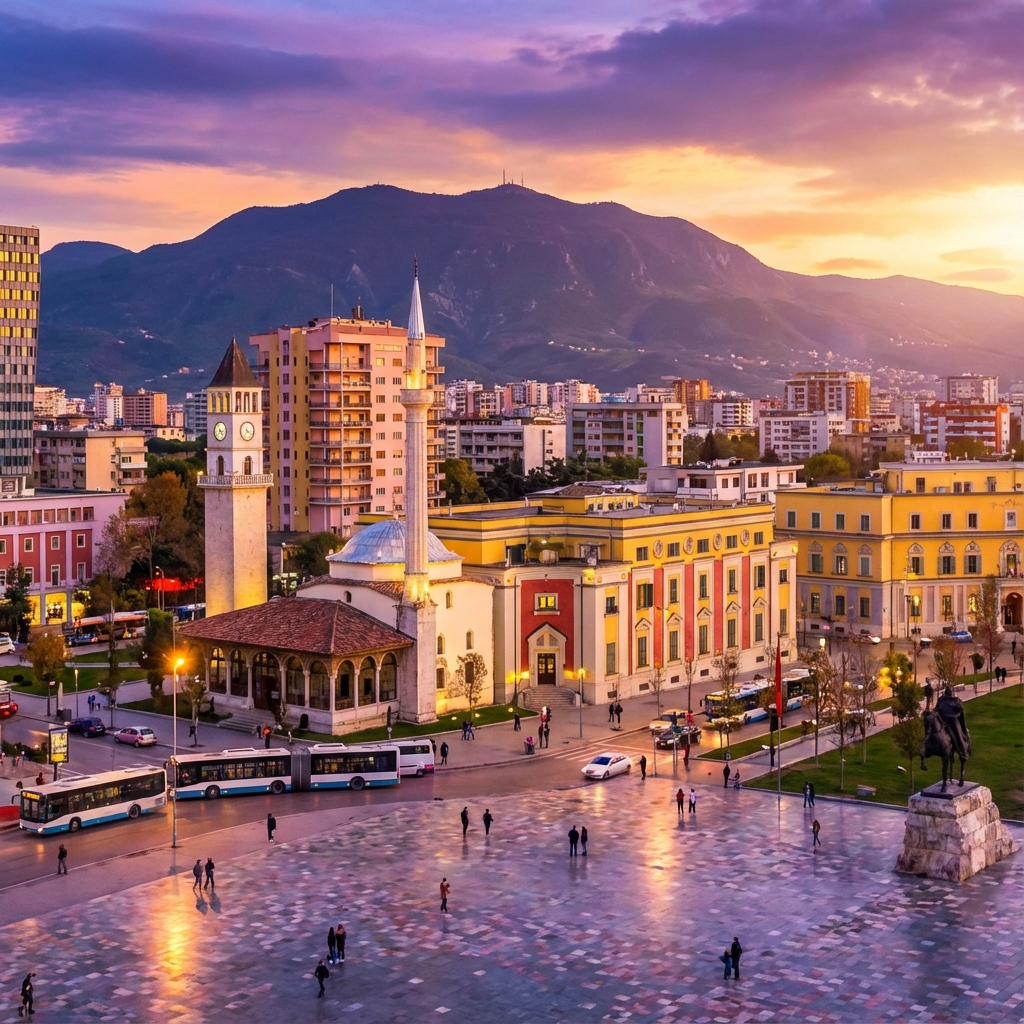
Tirana is famous for its painted buildings—a legacy of former mayor Edi Rama, who used color to revitalize the city's spirit during the early 2000s. What was once gray concrete is now a canvas of bright oranges, greens, and pinks. This initiative changed not just the skyline but the entire mood of the city.
- Skanderbeg Square: The massive heart of the city, renovated in 2017 to be a pedestrian-only zone. It is surrounded by the National History Museum with its iconic mosaic, the Opera House, and the beautiful 18th-century Et'hem Bey Mosque, which survived the communist era's atheist campaigns.
- The Grand Park of Tirana (Parku i Madh): A massive green lung in the south of the city, perfect for a walk around the artificial lake. It's where locals go to escape the urban buzz. On weekends, it's lively with runners, families, and coffee drinkers enjoying the lakeside cafés. Don't miss the Presidential Palace just behind the park.
- The Pyramid: As mentioned in our expert insight, this is a must-visit. Once a museum for Enver Hoxha, it is now a symbol of the new Albania—open, modern, and accessible. It hosts tech schools, art studios, and cafés.
- New Bazaar (Pazari i Ri): A renovated market area that captures the old Tirana charm with modern amenities. The steel and glass roof structure houses vendors selling fresh fruit, tobacco, and souvenirs, surrounded by excellent fish restaurants.
🛡️ Cold War History: Bunkers & Museums
Albania's history is unique and deeply affected by its isolated past under Enver Hoxha's regime. Tirana offers several immersive ways to explore this dark but fascinating period:
- Bunk'Art 1: Located on the outskirts near Mount Dajti, this massive underground nuclear bunker was built for the dictator and his generals. It has been converted into a sprawling history museum with over 100 rooms. It is an eerie, atmospheric journey through the Cold War.
- Bunk'Art 2: Located right in the city center off Skanderbeg Square, this smaller bunker focuses on the history of the Ministry of Internal Affairs and the "Sigurimi" (secret police). It is a poignant memorial to the victims of the regime.
- House of Leaves (Shtepia e Gjetheve): The museum of secret surveillance. Originally a clinic, it became the headquarters for the Sigurimi's eavesdropping operations. The exhibits of vintage spy equipment and interrogation files are chilling and fascinating.
- Postbllok Memorial: A small open-air memorial on the main boulevard featuring a piece of the Berlin Wall, a concrete bunker, and concrete supports from the notorious Spaç prison mine.
☕ Café Culture & Nightlife: Blloku
The neighborhood of Blloku was once restricted to the communist elite; ordinary citizens were not allowed to enter. Today, it is the trendiest part of the city, pulsating with life day and night:
- Coffee is King: Albanians take their coffee seriously, claiming the highest number of cafés per capita in the world. Spend an afternoon people-watching in one of the many designer cafés like Mulliri i Vjetër or Mon Chéri. Try a specialized espresso or a "kafe turke".
- Dinner & Drinks: From traditional grill houses (Zgara) serving Qofte (meatballs) to high-end cocktail bars like Nouvelle Vague (often ranked among the world's best bars), Blloku is the place to be after dark. The streets are alive with music and well-dressed locals.
- Radio Bar: An iconic spot decorated with vintage radios and communist-era memorabilia, famous for its cocktails and cool courtyard vibe.
⛰️ Day Trips & Nature
Tirana is ideally situated for exploring Central Albania's natural beauty:
- Mount Dajti: Take the Dajti Ekspres, the longest cable car ride in the Balkans (15 minutes), to the top of the mountain. At 1,613 meters, the air is fresh and cool. There's a revolving restaurant, hiking trails, and an adventure park. It's the perfect sunset spot.
- Kruja: Just an hour away, this historic town is the home of national hero Skanderbeg. Visit his castle and the Ethnographic Museum, then shop for antique silver and hand-woven rugs in the Old Bazaar, one of the best in the country.
- Cape of Rodon: A rugged cape extending into the Adriatic Sea, featuring a castle built by Skanderbeg and beautiful, wild beaches. It's about a 90-minute drive and offers a great escape to the sea.
- Bovilla Lake: A stunning reservoir with turquoise waters surrounded by cliffs. The hike to the "Gamti" balcony offers Instagram-famous views and is a moderate trek suitable for most fitness levels.
🍽️ Food Guide: What to Eat
Albanian cuisine is a delicious Mediterranean hybrid, influenced by Italy, Greece, and Turkey but with its own distinct character. Tirana is the best place to taste it all:
- Byrek: The ubiquitous savory pie. Try spinach, cheese, or meat versions. It's the ultimate cheap breakfast or snack.
- Tave Kosi: The national dish—lamb baked in yogurt and eggs. It's rich, creamy, and comforting. Best tried at a traditional "Zgara" or family restaurant like Oda.
- Fërgesë: A hot appetizer made of peppers, tomatoes, and cottage cheese. It's served bubbling in a clay pot and is perfect for dipping bread.
- Trileçe: The favorite dessert—a sponge cake soaked in three kinds of milk and topped with caramel. It rivals any version found in Latin America.
- Agritourism: Just outside the city, places like Uka Farm offer farm-to-table experiences where you can taste organic wine and grilled meats in a vineyard setting.
🎒 Practical Tips for 2026
- Budget: Tirana remains one of the most affordable capitals in Europe. A hearty meal can cost 5-10 EUR, and a coffee is often less than 1 EUR. Luxury hotels are available at a fraction of Western European prices.
- Transport: The city center is very walkable. For longer trips, use the public bus system (tickets are bought on board, usually 40 Lek / ~0.40 EUR). There is no Uber, but apps like Green Taxi or Speed Taxi work well. Taxis are metered and reliable.
- Language: Young people speak excellent English and often Italian (due to Italian TV influence). Older generations might speak Russian or Greek. Learning a few words in Shqip (*Përshëndetje* for hello, *Faleminderit* for thank you) is highly appreciated and will earn you smiles.
- Money: The currency is the Lek (ALL). While Euro is often accepted in larger establishments, always pay in Lek for the best rate. ATMs are everywhere, but Credins Bank tends to have lower fees for foreign cards.
- Connectivity: 4G/5G coverage is excellent. You can buy a tourist SIM card from Vodafone or One immediately at the airport for roughly 15-20 EUR for a large data package.
❓ FAQ: Visiting Tirana
Is Tirana safe?
Tirana is remarkably safe, with very low rates of violent crime. It is common to see families and groups of friends walking safely late into the night. The biggest danger is probably the erratic traffic—be careful when crossing streets!
Do I need cash?
Yes. While bigger hotels, supermarkets, and trendy restaurants take cards, Albania is still very much a cash-based society. You will need cash for small shops, buses, bakeries, and most cafés. Always carry some Lek notes.
Is the tap water drinkable?
Generally, locals prefer bottled water. While tap water is treated, the pipe infrastructure varies. It is safer and tastier to stick to bottled water, which is very cheap.
How many days do I need?
2 to 3 days is perfect to see the main sights of Tirana, enjoy the museums, and soak up the café culture. Add an extra day if you plan to hike Mount Dajti or visit Kruja.