
🏰 Royal Heritage: Wawel Hill
Perched above the Vistula River, Wawel Hill is the symbolic heart of Poland:
- Wawel Royal Castle: A mix of Romanesque, Gothic, and Renaissance architecture. Visit the State Rooms and the Royal Private Apartments to see the famous Flemish tapestries.
- Wawel Cathedral: The coronation site of Polish kings. Climb the Sigismund Tower to touch the massive bell for good luck.
- The Dragon's Den: A limestone cave under the castle hill, said to be the lair of the Wawel Dragon. A statue outside breathes real fire every few minutes!
🕯️ The Old Town (Stare Miasto)
A UNESCO World Heritage site, the Old Town is surrounded by the Planty Park, a green belt that replaced the old city walls.
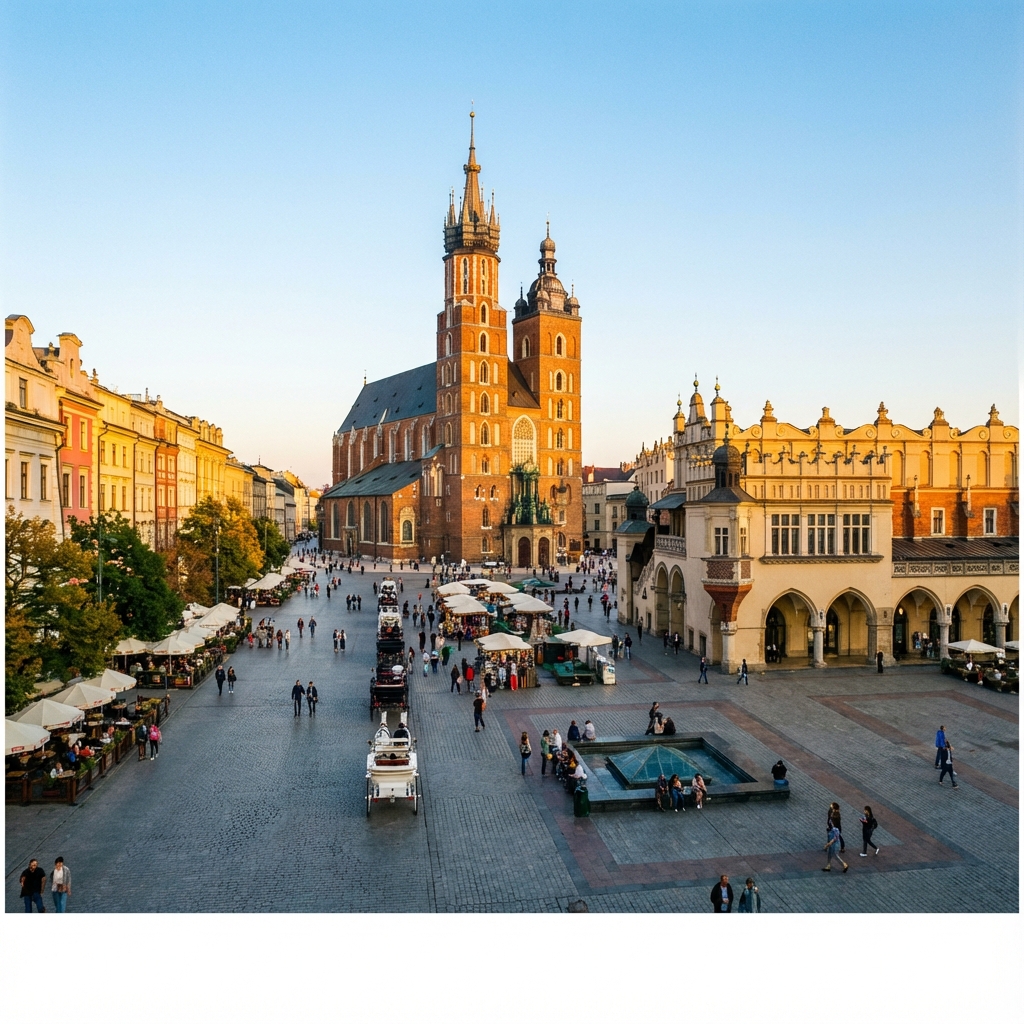
- Main Market Square (Rynek Główny): The center of life in Krakow. Listen for the 'Hejnał' trumpet call played from St. Mary's Basilica tower every hour—it stops abruptly to commemorate a trumpeter shot by an arrow in the 13th century.
- Cloth Hall (Sukiennice): The world's oldest shopping mall, sitting in the middle of the square. It's the perfect place to buy amber jewelry and local crafts.
- St. Mary's Basilica: Famous for its stunning blue star-studded ceiling and the magnificent wooden altarpiece by Veit Stoss.
🕍 Kazimierz: Jewish History & Bohemian Vibes
Once a separate Jewish city, Kazimierz is now Krakow's coolest district, filled with history, synagogues, and hipster cafes.
- Jewish Heritage: Visit the Old Synagogue and the Remuh Cemetery. The district was the setting for much of 'Schindler's List'.
- Plac Nowy: The heart of Kazimierz nightlife. By day, it's a flea market; by night, it's surrounded by bustling bars. This is where you eat 'Zapiekanka'.
- Schindler's Factory Museum: Located just across the river in Podgórze, this interactive museum tells the story of Krakow under Nazi occupation. It's essential viewing.
🍽️ Polish Comfort Food
Polish food is hearty and delicious. You won't go hungry here.
- Pierogi: Dumplings filled with meat, cheese and potato (Ruskie), or fruit. Try them at a 'Bar Mleczny' (Milk Bar) for an authentic, budget-friendly experience.
- Zapiekanka: An open-faced baguette topped with mushrooms and cheese, toasted until bubbly. The best ones are sold from the round building in Plac Nowy.
- Obwarzanek: A chewy, ring-shaped bread sold from blue carts on every street corner. It's the ancestor of the bagel.
- Żurek: A sour rye soup with sausage and egg, often served in a bread bowl.
🕊️ Day Trips: Reflection and Wonder
- Auschwitz-Birkenau: A sobering and essential trip. It's about an hour from Krakow. Book tickets months in advance as they sell out.
- Wieliczka Salt Mine: A subterranean world carved out of salt, featuring chapels, lakes, and chandeliers. It's a UNESCO site and truly unique.
- Zakopane & The Tatra Mountains: About two hours south, this is Poland's winter capital. Great for hiking in summer and skiing in winter, plus unique wooden architecture and smoked cheese.
🏗️ Nowa Huta: The Ideal Socialist City
For a completely different vibe, take a tram to Nowa Huta. Built in the 1950s as a utopian socialist realist city intended to counterbalance the "reactionary" intellectualism of Krakow's center:
- Architecture: Wide avenues and monumental grey buildings designed to intimidate and impress. It's a fascinating time capsule of the Cold War era.
- The Lord's Ark Church: A modernist church built by the workers against the wishes of the communist authorities. It became a symbol of resistance.
- Nuclear Bunkers: Underneath the city lies a vast network of cold war shelters. Several organizations offer guided tours of this underground world.
🐉 Legends & Mysteries
Krakow is a city of stories:
- The Trumpeter of St. Mary's: Why does the music stop? Legend says in 1241, a guard saw the Tatar army approaching. He played his trumpet to warn the city but was shot in the throat by an arrow mid-note. Today, the melody stops at that exact point to honor him.
- Prince Krakus: The mythical founder of the city who defeated the dragon (sometimes with the help of a shoemaker). You can visit the Krakus Mound, a prehistoric earthwork that offers great views of the city skyline.
- The Chakra: Believers say Wawel Castle is one of the world's seven main energy centers (chakras). You'll often see people leaning against the wall in the courtyard to absorb the energy.
🎨 Museums Worth Your Time
Beyond the main sights, Krakow has incredible museums:
- Rynek Underground: Located right beneath the main square, this high-tech museum reveals the medieval market stalls and streets that were buried over centuries of raising the ground level.
- Czartoryski Museum: Home to Leonardo da Vinci's Lady with an Ermine, one of Poland's greatest national treasures.
- Pharmacy Museum: A quirky but fascinating museum dedicated to the history of pharmacy, located in a beautiful historic townhouse.
🎒 Practical Tips for 2026
- Currency: Poland uses the Złoty (PLN). Prices are very affordable compared to the Eurozone. Card payments are ubiquitous.
- Transport: The tram system is excellent. Buy tickets at machines at stops or on board (with card). Uber and Bolt are also cheap and reliable.
- Winter Pollution: In winter, air quality can dip due to coal heating, though it's improving. Check the AQI if you have asthma.
❓ FAQ: Visiting Krakow
Is Krakow safe?
Yes, Krakow is considered one of the safest cities in Europe. Violent crime is rare, though you should always be aware of pickpockets in crowded tourist areas.
Is Krakow expensive?
No, Krakow is very affordable compared to Western European cities. You can enjoy a high-quality meal for under €15 and beer is very cheap.
How many days do I need in Krakow?
3 to 4 days is ideal. This gives you time to explore the city center and Kazimierz, plus a day trip to Auschwitz-Birkenau or the Salt Mines.