
🏰 Wawel Hill: The Royal Legacy
Wawel Royal Castle and Cathedral are the symbols of Polish national identity. For centuries, this was the residence of Polish kings:
- Wawel Castle: A stunning mix of Romanesque, Gothic, and Renaissance architecture. Don’t miss the Royal Private Apartments and the legendary Dragon’s Den (Smocza Jama) beneath the hill.
- The Legend of the Dragon: Look for the fire-breathing statue of the Wawel Dragon near the river—it vents real fire every few minutes!
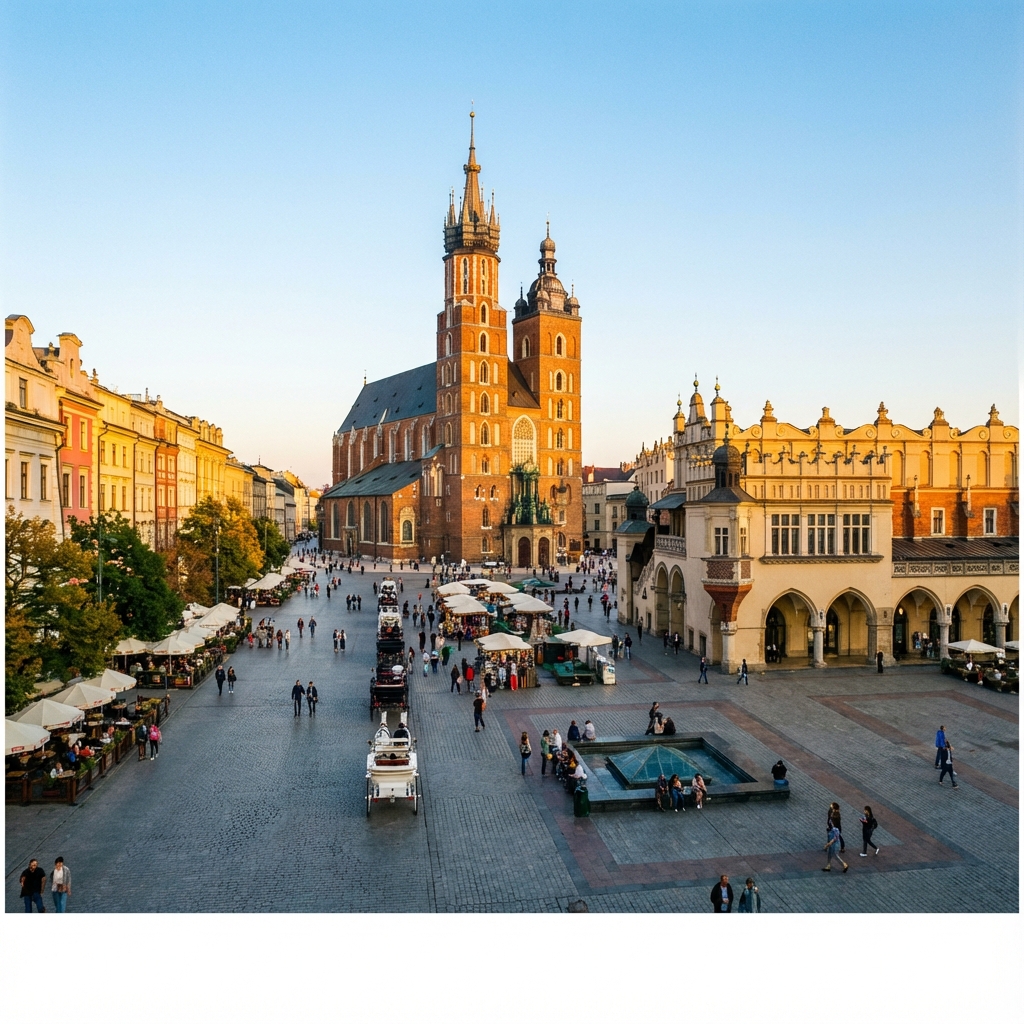
🏙️ Main Market Square (Rynek Główny)
The heart of Krakow’s Old Town is one of the largest medieval squares in Europe:
- Cloth Hall (Sukiennice): This beautiful building sits in the center of the square. It has been a trade hub for centuries and is now the perfect place to buy amber jewelry and Polish crafts.
- St. Mary’s Basilica: Famous for its stunning wooden altarpiece and the hourly trumpet call (Hejnał Mariacki) that breaks off mid-note to commemorate a legendary trumpeter.
- Rynek Underground: A fascinating high-tech museum located beneath the square, showcasing the medieval foundations of the city.
🕯️ Kazimierz: The Jewish Quarter
Once a separate city, Kazimierz is now the most soulful and artistic district of Krakow:
- Jewish Heritage: Home to numerous synagogues and the Old Jewish Cemetery. It is a center of Jewish culture and remembrance in Europe.
- Bohemian Vibe: By night, the area transforms into a hub of unique bars, antique shops, and street food. Be sure to try a Zapiekanka (Polish open-faced sandwich) at Plac Nowy.
- Schindler’s Factory: Located just across the river, the museum tells the story of Krakow under Nazi occupation and the man who saved hundreds of lives.
🍺 Food, Drinks & Nightlife
Krakow has one of the most vibrant and affordable nightlife scenes in Central Europe, concentrated largely in the Main Market Square and the streets of Kazimierz:
- Milk Bars (Bar Mleczny): Communist-era canteens serving traditional Polish food at extraordinarily low prices. Milk Bar Tomasza and Bar Mleczny Pod Temidą are legendary spots for pierogis, barszcz, and żurek — hearty rye soup served in a bread bowl.
- Kazimierz Bar Scene: By night, Kazimierz transforms into Krakow’s most atmospheric drinking district. Alchemia, a candlelit bar in a former workshop, perfectly captures the neighborhood’s bohemian soul. Singer café, full of antique sewing machines and mismatched furniture, is another classic.
- Craft Beer Revolution: Polish craft beer has exploded in quality. Szara Gęś (Grey Goose) near the Main Square and Pod Wawelem near the castle specialize in local brews worth seeking out.
- Polish Pierogi: Beyond the standard potato-and-cheese filling, try sweet versions with strawberries or blueberries, or the more adventurous sauerkraut-and-mushroom variants. Pierogi Mr & Mrs Pierogi is highly rated by locals.
🎭 Cultural Calendar & Events
Krakow is Poland’s cultural capital and hosts an extraordinary range of festivals throughout the year:
- Krakow Film Festival (May-June): One of Europe’s oldest documentary and short film festivals, attracting filmmakers and cinephiles from around the world to venues across the city.
- Jewish Culture Festival (late June-July): A celebration of Jewish heritage held in Kazimierz, featuring concerts, art exhibitions, guided walks, and the world’s largest outdoor klezmer concert on the final evening.
- Wianki (Midsummer, June): A traditional Slavic midsummer festival along the Vistula River, featuring floating wreaths, live music, and fireworks — one of Krakow’s most atmospheric annual events.
- Christmas Market (December): The Main Market Square transforms into one of Poland’s most enchanting Christmas markets, frequently ranked among Europe’s best.
🌄 Day Trips from Krakow
Krakow’s position in southern Poland makes it an excellent base for exploring some of the region’s most significant historical and natural sites:
- Auschwitz-Birkenau: The former Nazi German concentration and extermination camp, now a UNESCO World Heritage Site and essential memorial. Located 70 km west, the visit takes a full day and leaves a profound, lasting impression. Book an official guided tour well in advance — visits are free but timed slots fill months ahead.
- Wieliczka Salt Mine: A UNESCO-listed underground wonder just 15 km from the city center, featuring 300 km of tunnels, underground lakes, and extraordinary salt sculptures including a fully carved chapel. Easily reached by bus or minibus from the main bus station.
- Zakopane & the Tatra Mountains: Poland’s mountain resort town sits 2 hours south by bus and serves as the gateway to spectacular hiking, ski slopes in winter, and traditional Góral (highland) culture and cuisine.
- Ojców National Park: Poland’s smallest national park, located just 25 km north, features dramatic limestone rock formations, medieval castles, and hiking through forested valleys — easily accessible by bus or bicycle.
🎒 Practical Tips for 2026
- Walkability: The Old Town and Kazimierz are best explored on foot. The Royal Route is a perfect walking path connecting the main sights, and the Vistula riverbank offers a scenic connection between the two neighborhoods.
- Day Trips Must Book Early: Auschwitz-Birkenau and Wieliczka Salt Mine are Poland’s most visited attractions outside Warsaw. Book official tickets weeks or months in advance, especially in summer.
- Currency: Poland uses the Złoty (PLN). While cards are accepted everywhere, having some cash for smaller purchases, milk bars, and tips is useful. ATMs are abundant throughout the city center.
- Accommodation: Krakow has an outstanding range of options from well-equipped hostels in Kazimierz to boutique hotels in the Old Town. Budget travelers will find it excellent value compared to Western European cities.
- Getting Around: Trams and buses cover the city comprehensively. The center is compact enough to walk most places. Avoid taking taxis without confirming the price first — use the Bolt or FREE NOW apps for reliable, affordable rides.
- Best Time to Visit: May, June, September, and October offer the best weather and manageable crowds. July and August are the busiest months. December’s Christmas market is worth braving the cold for.
❓ FAQ: Visiting Krakow
Is Krakow safe at night? Yes, Krakow is generally very safe, with a strong tourist infrastructure. As in any major city, remain aware of your surroundings in busy nightlife areas and keep valuables secured.
How many days do I need? Three days comfortably cover the city’s main highlights. If you plan to visit Auschwitz-Birkenau and the Wieliczka Salt Mine — both highly recommended — allow 4 to 5 days to avoid feeling rushed.
Is Krakow expensive? No — Krakow is one of the best-value city break destinations in Europe. Meals, drinks, accommodation, and transport are all significantly cheaper than in Western European capitals, without any sacrifice in quality.


