
🏔️ Table Mountain & Natural Wonders
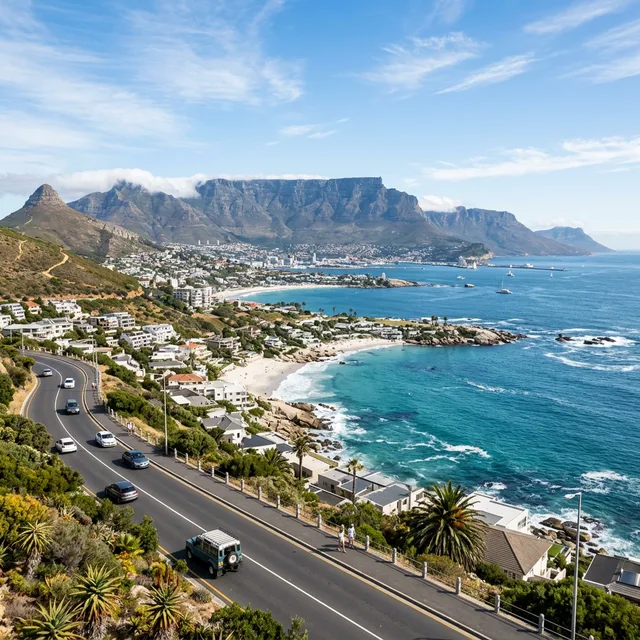
Cape Town’s dramatic landscape is dominated by its iconic flat-topped mountain and surrounding peaks.
- Table Mountain Cable Car: The easiest way to reach the summit at 3,563 feet, offering 360-degree views of the city, ocean, and peninsula. Book tickets in advance as they sell out quickly.
- Table Mountain Hiking: For adventurers, multiple trails lead to the top. Platteklip Gorge is the most popular but challenging route, taking 2.5-3 hours.
- Cape Point & the Cape of Good Hope: Drive 90 minutes to Africa’s most southwestern point, featuring dramatic cliffs, lighthouses, and the mythical meeting of two oceans.
- Cape Peninsula: A full-day adventure including penguin colonies, coastal drives, and wildlife spotting.
🏖️ Beaches & Coastal Paradise
Cape Town boasts some of the world’s most beautiful beaches, from urban gems to secluded coves.
- Clifton & Camps Bay: Prestigious beaches with white sand, clear waters, and upscale dining. Perfect for sunset cocktails and people-watching.
- Boulders Beach Penguin Colony: Watch endangered African penguins in their natural habitat. The boardwalk makes it accessible for all visitors.
- Muizenberg Beach: Historic beach with colorful Victorian bathing boxes and consistent surf breaks.
- Surfing Culture: Cape Town is a surfing paradise with waves for all levels. Take lessons at local beaches like Glen Beach.
🍷 Wine Regions & Culinary Scene
Cape Town is the gateway to South Africa’s world-famous wine regions and diverse food culture.
- Stellenbosch Wine Route: Just 45 minutes from Cape Town, this region produces exceptional Cabernet Sauvignon and Chardonnay. Visit estates like Meerlust or Kanonkop.
- Franschhoek Valley: Known as the ‘French Corner,’ this picturesque valley offers boutique wineries and excellent restaurants.
- Cape Malay Cuisine: A unique fusion of Malay, Dutch, and indigenous flavors. Try bobotie, sosaties, and koesisters in Bo-Kaap.
- Food Markets: The Old Biscuit Mill on Sundays offers artisanal foods, crafts, and a lively atmosphere.
🏛️ History & Cultural Heritage
Cape Town’s history spans from colonial times to the anti-apartheid struggle and modern democracy.
- Apartheid Museum: A powerful museum chronicling South Africa’s apartheid era and the struggle for freedom.
- Robben Island: Nelson Mandela’s prison for 18 years. Take the ferry tour to learn about the country’s dark past and triumphant future.
- District Six Museum: Commemorates the forced removal of 60,000 people during apartheid. A moving tribute to resilience.
- Bo-Kaap District: The colorful Malay Quarter with cobblestone streets, mosques, and Cape Dutch architecture.
🏙️ Urban Exploration & Modern Cape Town
Beyond nature, Cape Town offers vibrant urban experiences and contemporary culture.
- V&A Waterfront: A modern harbor development with shopping, dining, and the Two Oceans Aquarium.
- City Bowl Neighborhoods: Explore De Waterkant (gay village), Woodstock (trendy arts district), and Observatory (student area).
- Street Art & Culture: Cape Town has a thriving street art scene. Take a guided tour to see works by local artists.
- Gardens & Green Spaces: Company Gardens, the oldest garden in South Africa, offers a peaceful retreat in the city center.
🦁 Wildlife & Adventure Activities
Cape Town offers incredible wildlife experiences and outdoor adventures.
- Shark Cage Diving: Experience great white sharks up close (ethical operations only) off Gansbaai.
- Whale Watching: June to November offers incredible whale watching opportunities.
- Stellenbosch Mountains: Hiking, kloofing (canyoning), and abseiling in beautiful mountain landscapes.
- Day Trips: Visit nearby nature reserves for wildlife viewing and birdwatching.
🚇 Practical Cape Town Guide
- Best Time to Visit: November-March for summer weather and whale watching, or April-October for milder weather and fewer crowds. Cape Town has a Mediterranean climate.
- Weather Considerations: The ‘Cape Doctor’ wind can be strong, especially in summer. Pack layers and wind protection.
- Safety: Cape Town is generally safe for tourists, but avoid isolated areas at night. Use registered taxis or rideshares.
- Transportation: Uber and local rideshares are reliable. The MyCiTi bus system connects major areas. Renting a car is ideal for exploring the peninsula.
- Cultural Etiquette: South Africans are warm and welcoming. Learn basic Afrikaans phrases. Respect local customs and be mindful of the country’s complex history.
- Currency: South African Rand (ZAR). Credit cards widely accepted, but carry some cash for smaller establishments.
🌍 Understanding Cape Town’s History & Context
Cape Town cannot be understood without engaging with its complex past. The apartheid era (1948–1994) left deep spatial and social imprints on the city that are still visible today:
- The Township Experience: Khayelitsha, Langa, and Gugulethu — the townships on the Cape Flats — are home to over a million Capetonians. Responsible township tours run by community-based operators (not extractive tourist buses) offer meaningful insight into resilience, creativity, and community. Ask specifically for operators where the guide is from the community and a portion of profits returns directly to it.
- The Cape Malay Community (Bo-Kaap): The descendants of enslaved people brought from Malaysia, Indonesia, and Madagascar by the Dutch East India Company live in the pastel-painted houses of Bo-Kaap. The neighborhood’s identity is inseparable from its Cape Malay Muslim heritage — listen for the call to prayer, visit the Bo-Kaap Museum, and join a cooking class to learn the Cape Malay spice traditions that have influenced South African cuisine profoundly.
- The Slave Lodge: One of Cape Town’s most important and frequently overlooked museums, the Slave Lodge on Adderley Street occupies one of South Africa’s oldest colonial buildings. It held enslaved people from 1679 for over a century. The exhibitions document this history with unflinching honesty.
🏄 Adventure Beyond the City
Cape Town’s wild surroundings make it one of the world’s great adventure destinations:
- Paragliding from Signal Hill: Tandem paragliding launches from the slopes above Camps Bay deliver breathtaking views of the ocean, beaches, and Twelve Apostles mountain range. The coastal thermals here are considered among the best in the Southern Hemisphere for paragliding.
- Kiteboarding at Bloubergstrand: The consistent south-easterly “Cape Doctor” wind that keeps Cape Town summer days clear also makes Bloubergstrand one of the world’s top kiteboarding spots. The view from the water of Table Mountain framed by the bay is one of Cape Town’s iconic images.
- Hermanus (Whale Watching, 2 hours east): The coastal town of Hermanus is considered the best land-based whale watching destination in the world. Southern right whales (June–November) come into Walker Bay to breed and can often be seen from cliff paths with naked eye — no boat required. The annual Hermanus Whale Festival in late September celebrates their arrival.
❓ FAQ: Visiting Cape Town
How many days do I need in Cape Town? Five to seven days is the minimum to cover Table Mountain, the Peninsula, wine country, and a meaningful neighborhood exploration. Cape Town genuinely rewards longer stays — the combination of nature, culture, food, and adventure is extraordinary, and two weeks still leaves things undiscovered.
Is Cape Town safe for tourists? Cape Town requires more awareness than most European or East Asian destinations. Stick to well-populated, tourist-frequented areas during the day. Use Uber rather than hailing street taxis. Don’t walk on isolated trails alone. The areas around the V&A Waterfront, Bo-Kaap, Camps Bay, and the wine country are generally safe. Violent crime is concentrated in areas visitors rarely go — but petty theft and opportunistic crime require vigilance everywhere.
What is the best time to visit Cape Town? November to March (southern hemisphere summer) brings warm, sunny beach weather. April to October (autumn and winter) brings wetter weather but spectacular whale watching, dramatic moody skies, and far fewer tourists. The famous Cape Doctor wind peaks in December–January — it clears the air but can make beach days uncomfortable. Many locals consider April and May the best months overall.