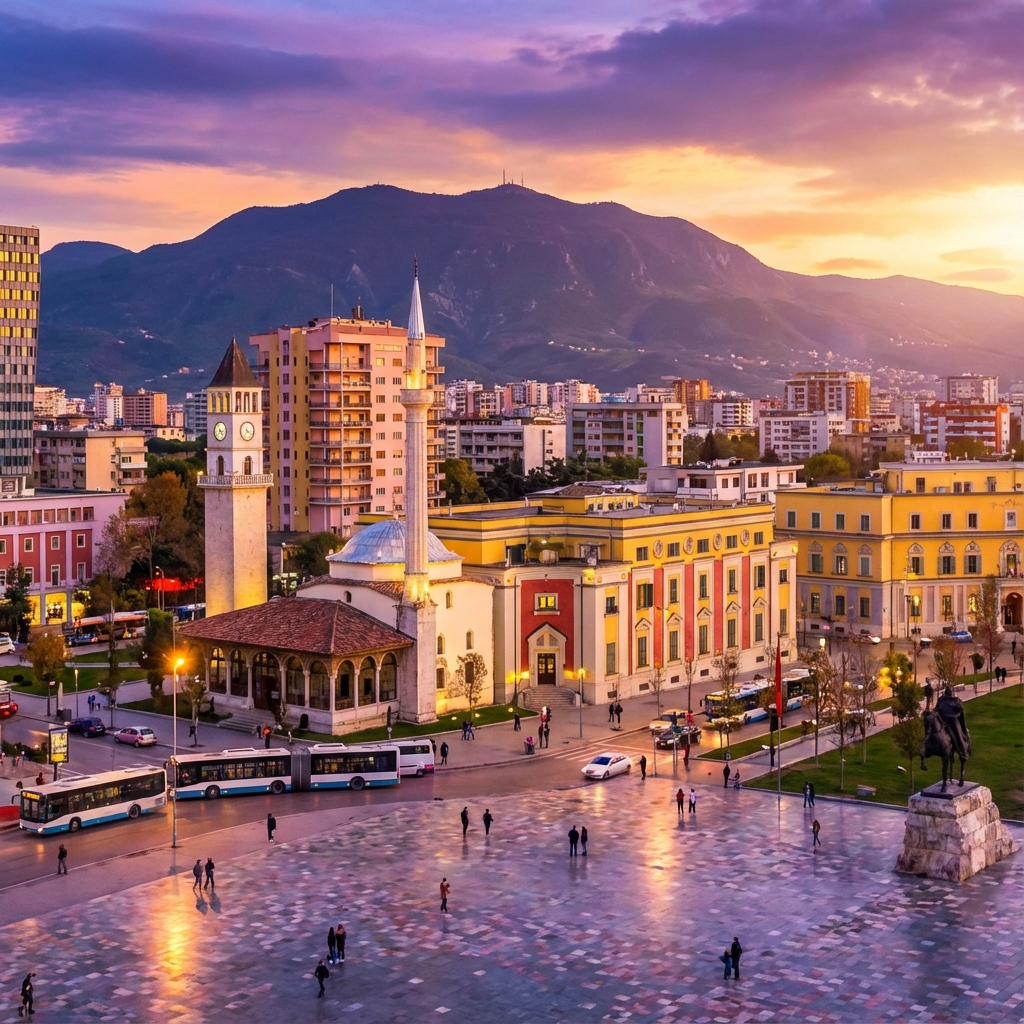

🌈 A City of Color: Architecture & Parks
Tirana is famous for its painted buildings—a legacy of former mayor Edi Rama, who used color to revitalize the city’s spirit:
- Skanderbeg Square: The massive heart of the city, surrounded by the National History Museum, the Opera House, and the beautiful Et’hem Bey Mosque.
- The Grand Park of Tirana: A massive green lung in the south of the city, perfect for a walk around the artificial lake. It’s where locals go to escape the urban buzz.
- The Pyramid: Once a museum for a dictator, now a modern IT hub and public space. It’s a symbol of the new Albania.
🛡️ Cold War History: Bunkers & Museums
Albania’s history is unique and deeply affected by its isolated past. Tirana offers several ways to explore this:
- Bunk’Art 1 & 2: Massive underground nuclear bunkers converted into historical and contemporary art museums. Bunk’Art 1 (on the outskirts) is larger, while Bunk’Art 2 (in the center) focuses on the history of the secret police.
- House of Leaves: A museum dedicated to the surveillance and interrogation techniques used by the Sigurimi (Albania’s secret service) during the communist era.
☕ Café Culture & Nightlife: Blloku
The neighborhood of Blloku was once restricted to the communist elite. Today, it is the trendiest part of the city:
- Coffee is King: Albanians take their coffee seriously. Spend an afternoon people-watching in one of the many designer cafés.
- Dinner & Drinks: From traditional grill houses (Zgara) serving Qofte to high-end cocktail bars, Blloku is the place to be after dark.
- Mount Dajti: Take the Dajti Ekspres (cable car) for a 15-minute ride up the mountain. You’ll find a stunning view of the city and cooler air.
🍽️ Albanian Food: A Hidden Culinary Gem
Albanian cuisine remains one of Europe’s best-kept secrets — fresh, Mediterranean-influenced, and extraordinarily affordable. Tirana is the best place to discover it:
- Tavë Kosi: Albania’s national dish — a baked casserole of lamb and rice in a rich egg-and-yogurt sauce. Rich, comforting, and found in traditional restaurants (bufe) across the city. Try it at Oda Restaurant in the city center.
- Byrek: Albania’s beloved flaky pastry, similar to börek, available with cheese, spinach, minced meat, or pumpkin. Bakeries (furra) throughout the city sell freshly baked byrek from early morning. Eating it standing on the street is the authentic experience.
- Qofte: Grilled minced meat patties seasoned with herbs — Albania’s version of the Balkan meat staple, served with yogurt, salad, and bread. Zgara (grill houses) throughout Blloku and the center serve excellent versions at unbeatable prices.
- Raki: Albania’s national spirit, a grape or mulberry brandy traditionally offered as a gesture of hospitality. Refusing raki is considered impolite. The homemade versions found in traditional restaurants are far superior to commercial varieties.
- New Tirana Food Scene: A new wave of creative Albanian chefs is reinterpreting traditional ingredients with modern techniques. Restaurants like Era, Juvenilja, and Mullixhiu are garnering international attention and offer extraordinary value.
🏛️ Tirana’s Cultural Reinvention
Tirana has transformed dramatically since the fall of communism in 1991, and the pace of change continues to accelerate:
- National Gallery of Arts: An impressive collection of Albanian art spanning the communist era to the present, including socialist realist paintings that offer a fascinating window into the country’s recent past.
- National Historical Museum: The massive mosaic mural on its facade is one of Tirana’s most iconic images. Inside, the collection covers Albanian history from the Illyrian era through independence and the communist period.
- Tirana Art Labs: A growing cluster of contemporary art spaces in the city center, showcasing young Albanian artists responding to their country’s rapid transformation. Many exhibitions are free to enter.
- Street Art Scene: Beyond the famous painted buildings, Tirana has a growing street art scene. The area around the Blloku neighborhood and the banks of the Lana River feature murals by local and international artists.
🌄 Day Trips from Tirana
Albania is a compact country with extraordinary natural and historical diversity — all within easy reach of Tirana:
- Krujë: Albania’s national hero Gjergj Kastrioti (Skanderbeg) was born in this hilltop fortress town 35 km north of Tirana. The castle, national museum, and old bazaar make for a fascinating half-day trip with excellent views across the plain below.
- Durrës: Albania’s second city and main port, just 38 km west, boasts an impressive Roman amphitheatre — the second largest in the Balkans — alongside long sandy beaches and a lively seafront promenade. Easy by bus or shared furgon (minibus) in under an hour.
- Albanian Riviera: Three to four hours south, the dramatic coastline between Vlorë and Sarandë features crystal-clear turquoise water, small fishing villages, and beaches that rival anything in Croatia or Greece at a fraction of the cost. Best visited May-June or September.
- Berat: UNESCO-listed “City of a Thousand Windows,” a stunning Ottoman town of white-washed houses climbing a hillside above the Osum River gorge. Located 120 km south of Tirana, it’s easily reached by bus and well worth an overnight stay.
🎒 Practical Tips for 2026
- Budget: Tirana remains one of the most affordable capitals in Europe. A full sit-down meal with wine rarely exceeds €10, making it exceptional value even by Balkan standards.
- Transport: The city is very walkable in the center. For longer trips, use the colorful City Bus system (fares around 40 Lek / 0.35 EUR). There is no Uber — use apps like ‘Speed’ or ‘Bolt Albania,’ or hail a clearly marked yellow taxi. Always agree on the price before departing.
- Language: Young Albanians typically speak excellent English and Italian (Italian TV was widely watched during the communist era). Learning a few words in Shqip — Përshëndetje (hello), Faleminderit (thank you), Ju lutem (please) — is warmly appreciated.
- Cash: Albania uses the Albanian Lek (ALL). Carry cash — while bigger hotels and restaurants accept cards, smaller shops, buses, street food, and traditional cafes remain cash-only. ATMs are widely available in central Tirana.
- Best Time to Visit: April-May and September-October are ideal, with warm weather and no summer crowds. July and August are hot and Tirana empties slightly as locals head to the coast — beach-goers should head to the Albanian Riviera instead.
❓ FAQ: Visiting Tirana
Is Tirana safe? Tirana is remarkably safe, with very low rates of crime against tourists. It’s common to see families and large groups of friends out late into the night, including weeknights. The hospitality culture means strangers will often go out of their way to help visitors.
Is Albania in the EU? Not yet, though Albania is an official EU candidate country. Visitors from EU countries, the UK, USA, Canada, and Australia can enter visa-free for up to 90 days. The country uses its own currency (Lek), not the Euro, though many tourist establishments also accept Euros informally.
Should I visit just Tirana or explore more of Albania? Albania rewards those who venture beyond the capital. Even one or two nights in Berat, Gjirokastër, or the Albanian Riviera adds enormous depth to a trip. The country is compact, public transport connections are improving, and accommodation throughout is very affordable.


