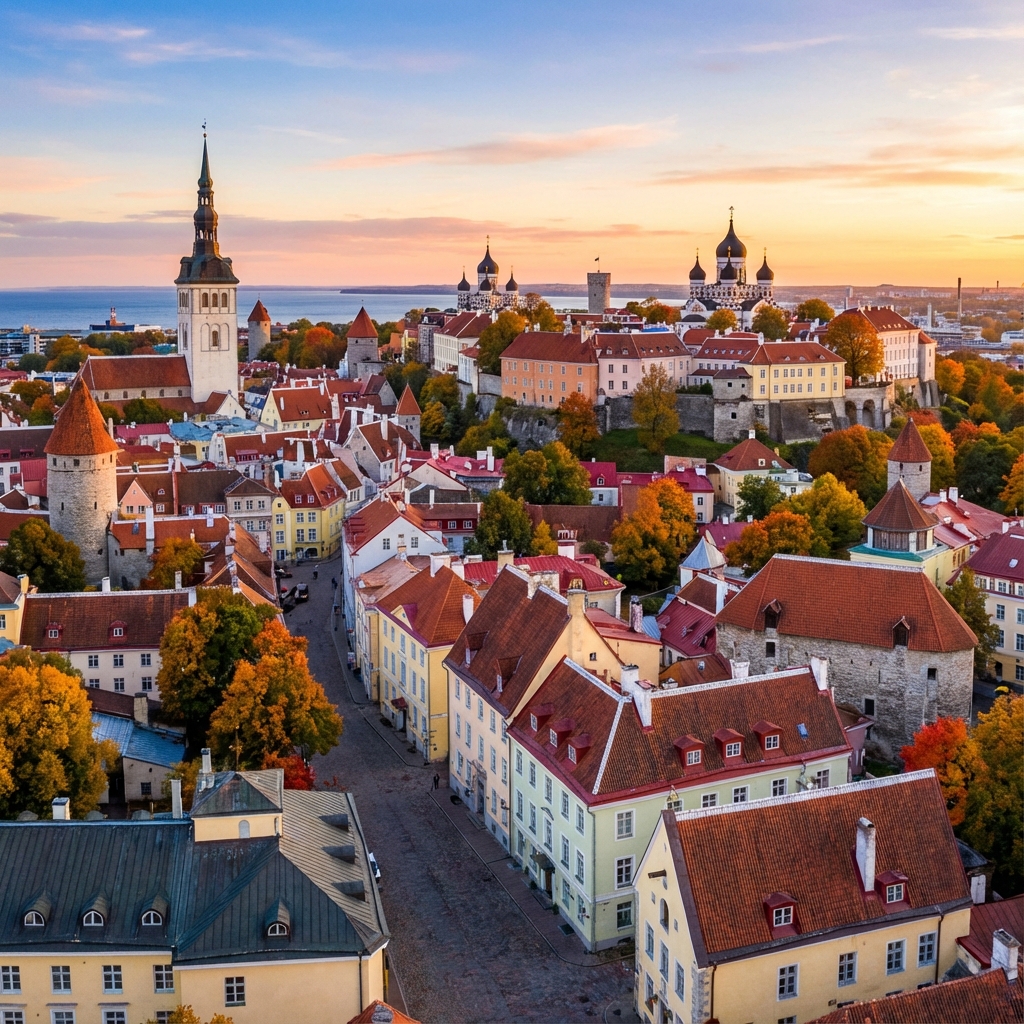

🏰 The Medieval Core: A UNESCO Treasure
Tallinn’s Old Town is divided into the Upper Town (Toompea) and the Lower Town. It is a labyrinth of medieval walls, towers, and hidden courtyards:
- Toompea Hill: The seat of power for centuries. Visit the Alexander Nevsky Cathedral with its onion domes and the Toompea Castle, which houses the Estonian Parliament.
- Raekoja Plats (Town Hall Square): The center of the Lower Town, famous for its Gothic Town Hall and the oldest continuously operating pharmacy in Europe (Raeapteek).
- The Town Wall: Walk along sections of the imposing 13th-century wall and climb the Hellemann Tower for a unique perspective on the city.
🎨 Telliskivi & Kalamaja: The Modern Face
To see the contemporary side of Tallinn, head just north of the Old Town to the Kalamaja district:
- Telliskivi Creative City: A former industrial complex turned into a vibrant hub of designer boutiques, street art, and some of the city’s best restaurants and galleries.
- Fotografiska Tallinn: A world-class contemporary photography museum located in the heart of Telliskivi, featuring rotating exhibitions and a sustainable rooftop restaurant.
- Kalamaja Architecture: Known for its colorful wooden houses (the ‘Tallinn Houses’), this neighborhood is perfect for a quiet morning walk.
⚓ Maritime History & Future Tech
Tallinn has always been a city of the sea and of the mind:
- Seaplane Harbour (Lennusadam): One of Europe’s most interactive maritime museums, housed in historic seaplane hangars. You can even walk inside a real 1930s submarine.
- Kadriorg Park: Established by Peter the Great, this beautiful park features the Kadriorg Palace and the Kumu Art Museum, an architectural masterpiece of modern Estonia.
- Digital Estonia: Experience the ‘e-Estonia’ spirit everywhere—from city-wide free Wi-Fi to robot delivery vehicles navigating the sidewalks.
🍽️ Estonian Food & Drink Scene
Estonian cuisine has undergone a quiet revolution in recent years, with Tallinn’s chefs leading a movement to rediscover and reinvent traditional Nordic and Baltic ingredients:
- NOA Restaurant: Perched on a clifftop overlooking the sea just outside the city center, NOA is Tallinn’s most celebrated fine-dining experience, serving creative New Nordic cuisine with Estonian ingredients. The sea views from the terrace are extraordinary.
- Black Bread (Must Leib): Estonia’s staple — a dense, slightly sour rye bread that accompanies almost every meal. The best versions, sold at Tallinn’s markets, are made from sourdough starters decades old.
- Kama: A uniquely Estonian mixture of roasted grain flour, traditionally eaten stirred into yogurt or kefir. Modern Tallinn restaurants are incorporating it into desserts and ice cream with great success.
- Craft Beer Culture: Estonia’s craft brewing scene has exploded. Põhjala Brewery, based in Tallinn, produces exceptional Baltic porters and seasonal ales. The Taproom in the Telliskivi Creative City is the best place to sample their range alongside other local producers.
- Old Town Dining Warning: Restaurants directly on the main tourist squares tend to be overpriced and mediocre. Walk two streets away for dramatically better quality and value.
🎭 Events & Cultural Highlights
Tallinn punches well above its size when it comes to cultural programming:
- Song and Dance Festival (every 5 years): Estonia’s most profound cultural event, in which tens of thousands of performers gather to sing traditional songs. This centuries-old tradition was central to Estonia’s peaceful independence movement — singing their way to freedom from the Soviet Union in 1991.
- Tallinn Music Week (April): One of the most respected new music showcases in Northern Europe, with hundreds of acts performing across venues throughout the city. A great opportunity to discover emerging Baltic and Scandinavian artists.
- Black Nights Film Festival (November): The largest film festival in the Baltic region, screening hundreds of international films over three weeks. It holds A-list festival status from the International Federation of Film Producers Associations.
- Christmas Market (December): Tallinn’s Old Town hosts one of Europe’s most enchanting Christmas markets, frequently ranked among the continent’s finest, centered on the medieval Town Hall Square.
🌄 Day Trips from Tallinn
Estonia is a small, beautiful country and Tallinn makes an excellent base for exploring beyond the capital:
- Lahemaa National Park: Estonia’s largest national park, just 70 km east of Tallinn, features dramatic coastal cliffs, ancient manor houses, peaceful fishing villages, and extensive bog landscapes. Renting a car or joining a guided tour is the best way to explore.
- Paldiski: A former top-secret Soviet nuclear submarine base, now a hauntingly empty coastal town with crumbling military infrastructure and dramatic limestone cliffs. An eerie and fascinating glimpse into Estonia’s Soviet past, 50 km west of Tallinn.
- Tartu: Estonia’s second city and university town, 2.5 hours south by bus, has a vibrant student population, excellent museums including the Estonian National Museum, and a compact, walkable center beside the Emajõgi River.
- Finnish Day Trip: Helsinki is just 80 km across the Gulf of Finland — a 2-hour ferry ride with Tallink or Viking Line. Many travelers combine the two cities in a single trip, spending a few nights in each.
🎒 Practical Tips for 2026
- Connectivity: Estonia is one of the most digitally advanced nations on earth. You’ll find high-speed public Wi-Fi in virtually every café, park, and public space. Estonia pioneered e-residency and digital governance — the country’s tech-forward approach is visible everywhere.
- Transport: Tallinn is compact and extremely walkable. The Old Town, Telliskivi, and Kadriorg are all reachable on foot from the center. For longer distances, the tram and bus system is efficient. Public transport is free for registered residents but visitors pay via smartcard (Ühiskaart) or contactless payment.
- Weather & Packing: Tallinn has genuine seasons. Summers are warm and light (the sun barely sets in June); winters are cold and snowy with very short days. The Old Town looks spectacular under snow in December and January. Pack layers regardless of the season.
- Language: Estonian is the official language — a Finno-Ugric language related to Finnish and quite unlike any other European tongue. English is spoken fluently by almost everyone, especially in the service industry and by anyone under 50.
- Best Time to Visit: June and July offer the longest days and warmest weather. December is magical for the Christmas market. Avoid February for the coldest temperatures and shortest days.
❓ FAQ: Visiting Tallinn
Is Tallinn expensive? Tallinn is more affordable than Nordic capitals like Stockholm or Helsinki, but more expensive than its Baltic neighbors Riga and Vilnius. In the Old Town tourist hubs, expect Western European prices. Venture into Telliskivi and Kalamaja for much better value.
How many days are enough for Tallinn? Two days cover the Old Town and Telliskivi comfortably. Three to four days allow you to explore Kadriorg Park, the Seaplane Harbour, and take at least one day trip — highly recommended to Lahemaa National Park or across the Gulf to Helsinki.
Is Tallinn worth visiting in winter? Absolutely. The medieval Old Town under snow, with the Christmas market in full swing and log fires in the medieval taverns, is one of the most atmospheric winter city experiences in Europe. Dress warmly and embrace the darkness.