
☕ The Spirit of Baščaršija: The Old Bazaar
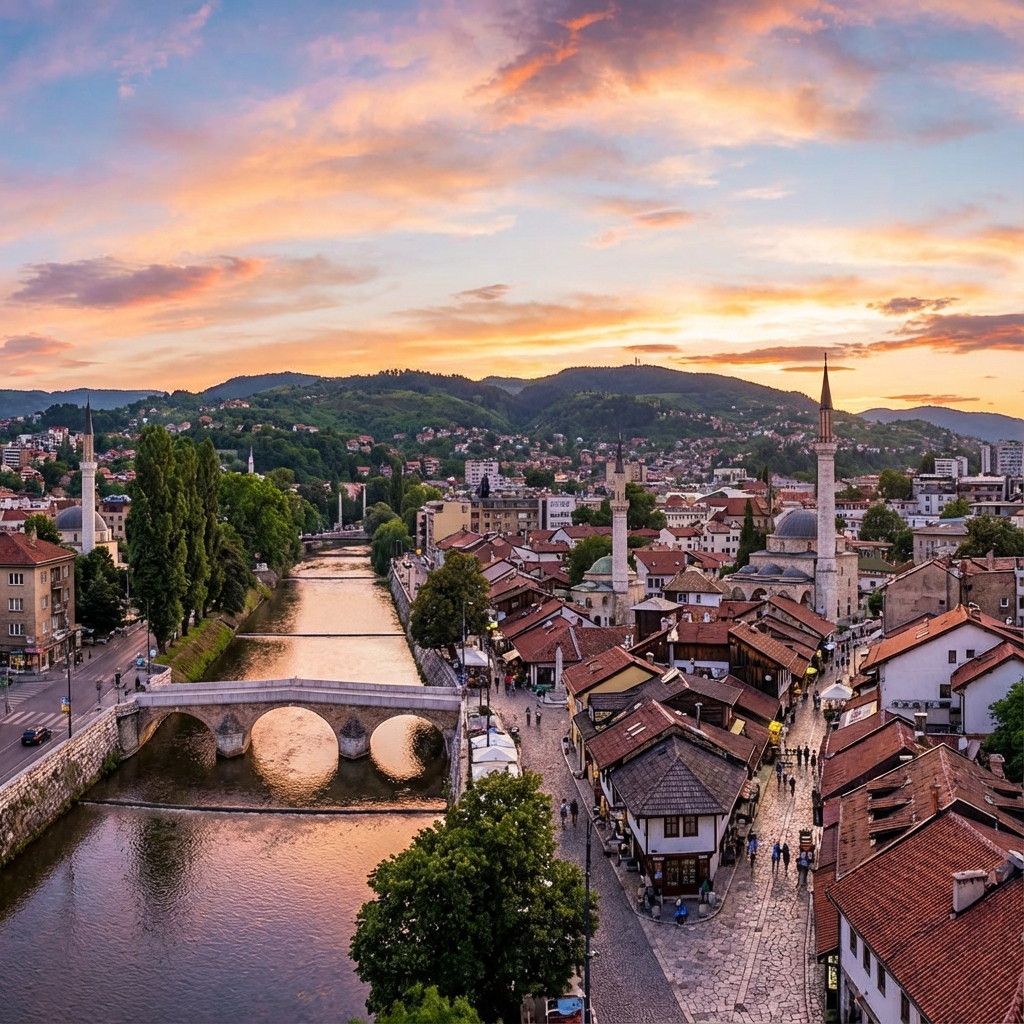
Baščaršija is the Ottoman-era core of Sarajevo and its cultural heartbeat:
- Sebilj: The iconic wooden fountain in the center of the bazaar. Legend says if you drink from it, you will return to Sarajevo.
- Gazi Husrev-beg Mosque: A stunning example of Ottoman architecture and the center of the city’s Islamic life since the 16th century.
- Coppersmith’s Street (Kazandžiluk): Watch artisans hammer out intricate coffee sets and plates in the same way they have for centuries.
🛡️ A Witness to History: WWI and the Siege
Sarajevo has been at the center of global events multiple times. To understand the city, visit these landmarks:
- Latin Bridge: This modest bridge was the site of the assassination of Archduke Franz Ferdinand in 1914, the event that triggered World War I.
- Tunnel of Hope (Tunel Spasa): A deeply moving museum located at the site of the underground tunnel that was the city’s only lifeline during the 1,425-day siege in the 1990s.
- War Childhood Museum: A unique and emotional museum focusing on the experiences of children during the war, using personal objects and stories.
🏔️ Mountains & Views: The Olympic Legacy
Surrounded by the Dinaric Alps, Sarajevo hosted the 1984 Winter Olympics. The mountains are an integral part of city life:
- Sarajevo Cable Car (Trebevićka žičara): Take a 10-minute ride from the city center up to Mount Trebević for breathtaking panoramic views and a chance to walk along the abandoned Olympic bobsleigh track.
- Yellow Fortress (Žuta Tabija): The best spot for a sunset view over the red roofs of the city. During Ramadan, this is where the cannon fires to mark the end of the fast.
🕌 A City of Four Faiths
Perhaps no other city in Europe demonstrates the coexistence of multiple religions more vividly than Sarajevo. Within a few hundred meters of each other stand a mosque, an Orthodox cathedral, a Catholic church, and a synagogue — earning the city the nickname “Jerusalem of Europe”:
- Gazi Husrev-beg Mosque: Built in 1531, this is the most magnificent Ottoman mosque in the Balkans. Non-Muslims are welcome to visit outside prayer times; modest dress is required.
- Serbian Orthodox Cathedral of the Nativity of the Theotokos: A striking 19th-century cathedral housing a treasury of medieval Serbian Orthodox art and icons.
- Sacred Heart Cathedral: A neo-Gothic Catholic cathedral dating from 1889, featuring beautiful stained glass windows and an ornate interior.
- Old Synagogue (Stari Hram): One of the oldest Sephardic synagogues in the Balkans, now a museum documenting Sarajevo’s Jewish heritage dating back to the 16th-century expulsion from Spain.
🍽️ Sarajevo’s Food Scene
Sarajevo’s cuisine is a delicious blend of Ottoman, Austro-Hungarian, and Balkan traditions, and it remains one of the most authentic and affordable food cities in all of Europe:
- Ćevapi: Sarajevo’s most iconic dish — small grilled minced meat sausages served in a soft somun flatbread with raw onion and kajmak (a creamy dairy spread). Aščinica Željo and Hodžić in Baščaršija are the two legendary rivals for the city’s best ćevapi.
- Burek: A flaky, layered pastry filled with minced meat, cheese, spinach, or potato. Traditionally sold by weight at bakeries (pekara) and eaten for breakfast. Locals eat it standing at the counter.
- Sarajevo Coffee: Bosnian coffee (Bosanska kafa) is served in a small copper džezva alongside sugar lumps and a square of Turkish delight. The ritual of preparing and drinking it slowly is an essential Sarajevo experience. Never rush a Bosnian coffee.
- Meze Culture: Many restaurants serve extensive spreads of small dishes — stuffed peppers, grilled vegetables, ajvar (roasted red pepper relish) — that represent the richness of Balkan home cooking at its finest.
🌄 Day Trips from Sarajevo
Sarajevo is surrounded by dramatic landscapes that make excellent day trips or longer excursions:
- Mostar: The jewel of Herzegovina, famous for its reconstructed Ottoman bridge (Stari Most) arching over the turquoise Neretva River. Located 130 km south, the journey takes around 2.5 hours by bus through spectacular mountain scenery.
- Jahorina Ski Resort: The venue for the 1984 Winter Olympics women’s skiing events, just 30 km from Sarajevo. Excellent and affordable skiing in winter, with hiking and mountain biking in summer.
- Lukomir Village: One of Bosnia’s highest and most isolated villages, this traditional Bosnian highland settlement sits at 1,469 meters and appears frozen in time. The hike through the canyon is spectacular, especially in wildflower season (June-July).
🎒 Practical Tips for 2026
- Gastronomy: You haven’t experienced Sarajevo until you’ve tried ćevapi from ‘Željo’ or ‘Hodžić’ in the old town — these are the city’s most legendary restaurants and attract queues for good reason.
- Transport: The city center is very walkable. For longer trips, use the historic trams (among the oldest in the world — numbered 1 and 3 cover the main tourist corridor) or the cheap local taxis. Always agree on the price before getting into an unmetered taxi.
- Currency: Bosnia uses the Convertible Mark (BAM), pegged to the Euro at approximately 1 EUR = 1.96 BAM. While many places now take cards, smaller shops, traditional eateries, and the trams still prefer cash.
- Respect Religious Sites: When visiting mosques, remove shoes and dress modestly (covered arms, legs, and head for women). The city is very welcoming, but showing respect for religious sites is deeply appreciated.
- Budget Traveler’s Paradise: Sarajevo is extraordinarily affordable. A sit-down meal with drinks rarely exceeds €10, and a quality double room in the old town can be found for under €50 per night.
- Best Time to Visit: Late spring (May-June) and early autumn (September-October) offer the best weather. Winter is atmospheric but cold — the mountains are great for skiing. Avoid late July and August when heat in the valley can be intense.
❓ FAQ: Visiting Sarajevo
Is Sarajevo safe for tourists? Sarajevo is very safe for tourists. The Bosnian people are incredibly hospitable — visitors frequently describe Sarajevo as having some of the warmest and most welcoming locals they’ve encountered anywhere in Europe. Use standard precautions as you would in any European capital.
What is the best time to visit? Late spring (May-June) and early autumn (September-October) offer the best weather for exploring both the city and the surrounding mountains. December and January are excellent for the winter atmosphere, though expect snow and cold temperatures.
Do I need a visa for Bosnia? Citizens of EU countries, the UK, USA, Canada, and Australia can enter Bosnia-Herzegovina visa-free for stays of up to 90 days. Always check the latest requirements for your specific nationality before traveling.