
Chefchaouen Travel Guide 2026: Morocco’s Blue Pearl
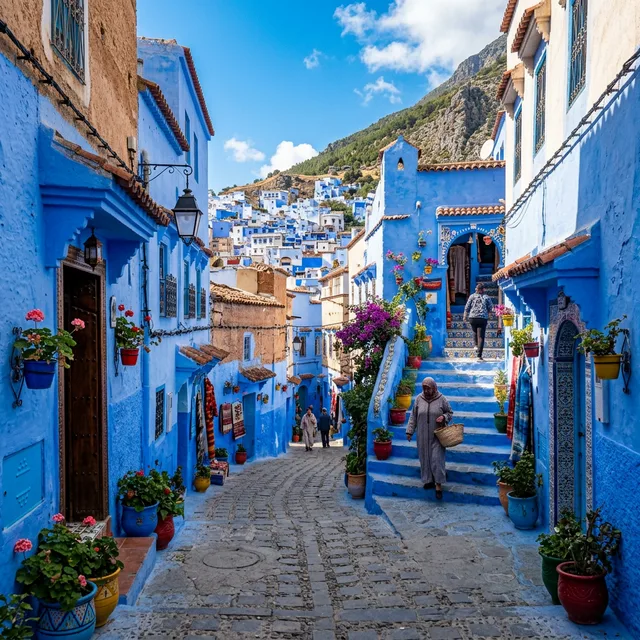
There are places that look like photographs before you take them. Chefchaouen is one of them. Tucked into a fold of the Rif Mountains in northern Morocco, this small medina city has been painted in every shade of blue imaginable — cobalt, cerulean, indigo, powder blue, sky blue — for decades. The effect, especially in the early morning light or at the blue hour before sunset, is otherworldly.
But Chefchaouen is far more than a photogenic backdrop. It is a living Berber mountain town with deep roots in Andalusian exile culture (Jews and Moors expelled from Spain in 1492 settled here), a thriving craft tradition, and a genuinely warm hospitality that resists the commodification of its beauty. The pace is slow, the air is clear (the city sits at 600 meters), and the surrounding mountains offer excellent hiking through cedar forests and past rushing waterfalls.
Expert Tip: The medina is most magical in the very early morning (6–8 am) before the day-trippers arrive from Tangier and Fez. The light is extraordinary, the lanes are empty, and the only sounds are the call to prayer and birdsong. Stay overnight — ideally at a riad within the medina walls — to have these hours to yourself.
🏰 The Blue Medina
-
The Blue Buildings: History of a Color: The reason Chefchaouen is blue is genuinely debated. The most common explanation is that the blue was introduced by Jewish refugees in the 1930s — blue being associated in Jewish tradition with the heavens and with the divine. Another theory holds that the blue discourages mosquitoes. A third says it simply became a fashion that the whole community adopted over time. Whatever the origin, the result is a medina where the color varies from building to building, alley to alley — no two walls are identical. The contrast with the red-tiled roofs and the dusty-green mountains behind is extraordinarily beautiful.
-
Uta el-Hammam Square: The heart of the medina — the main square, shaded by trees, lined with outdoor café tables and bordered by the Grand Mosque and the Kasbah. This is where everything begins and ends in Chefchaouen. Sit with a pot of mint tea and watch the morning unfold. The square is the social center of both the local community and visiting travelers — unpretentious and genuinely mixed.
-
The Kasbah and Its Garden: The old fortress at the center of the medina, built in the 15th century, now houses a small museum of Andalusian art, local ethnography, and a charming garden courtyard with fountains and orange trees. The tower offers one of the best elevated views over the blue medina rooftops. Quiet, cool, and worth an hour.
-
Spanish Mosque Ruins: A 20-minute walk up the hill behind the medina brings you to the ruins of a mosque built by Spanish Republican forces in the 1920s, never completed and long abandoned. But the real reason to make the climb is the view: the entire blue medina spread below you, framed by the deep green of the mountains. The best photography spot in Chefchaouen, and finest at golden hour.
🕌 Souks & Local Crafts
Chefchaouen’s craft tradition is distinct from the more commercially intense souks of Marrakech or Fez — the atmosphere is relaxed, prices are more reasonable, and the quality of work is high.
- Textiles and Wool: The Rif Mountain tradition of weaving produces distinctive striped blankets (haik), cloaks (djellaba), and woven bags in earthy natural colors. The covered textile souk just off Uta el-Hammam is the best place to browse.
- Silverwork: Chefchaouen has a strong tradition of fine silverwork — bracelets, rings, and fibulae (traditional clasp jewelry) made by local craftsmen. Look in the small workshops along the Rue Targhi and Rue el-Hai.
- Leather Goods: Handmade belts, sandals, and bags using traditional vegetable-tanned leather. Much more subdued in style than the flamboyant Fez versions.
- Olive Oil and Argan Products: The surrounding mountains produce excellent olive oil; small stalls sell locally made soaps, argan oil, and hand creams of notably good quality.
🏔️ Natural Beauty & Outdoor Adventures
-
Akchour Waterfalls: One of the most rewarding day hikes in northern Morocco — a dramatic four-tiered waterfall system about 30 km from Chefchaouen, accessible via a scenic gorge trail (Grand Taxis run from the main square). The lower falls are a 45-minute walk in; the upper falls (called “God’s Bridge”) require 3–4 hours round trip through forest and over stepping stones. The pools are turquoise and cold, perfect for swimming in summer. One of the genuinely unmissable experiences of the Rif Mountains.
-
Talassemtane National Park: Morocco’s smallest national park, beginning almost at the edge of the medina and extending into the Rif Mountains. Dense cedar and fir forests, home to Barbary macaques (visible on many trails), wild boar, and raptors. The hiking network is extensive — trails ranging from a leisurely two-hour loop to multi-day treks through the park. The marked Circuit Talassemtane takes two days and rewards with extraordinary mountain views.
-
The Path of the Farmer (Lalla Brika Viewpoint): A 3-hour loop hike from the medina through farms and villages on the slopes above the city, circling back via the panoramic Lalla Brika viewpoint. One of the best ways to experience the agricultural landscape and traditional Berber village life that surrounds Chefchaouen.
🍽️ Moroccan Cuisine in Chefchaouen
The food here is mountain Moroccan — hearty, warming, less spiced than the imperial city cuisine of Fez or Marrakech, with fresh local produce as the star.
- Tagine: The standard dish, but prepared with local mountain lamb, root vegetables, and preserved lemon. Each restaurant has a slightly different spice balance — the simpler versions, with a good bread and olive oil on the side, are often best.
- Harira: The thick lentil and tomato soup that serves as the traditional meal-opener, especially during Ramadan. Deeply filling and warming on cool mountain evenings.
- Goat Cheese: Local fresh goat cheese, rarely found outside the Rif region, is sold at the morning market and served in many guesthouses. Mild, creamy, and distinctive.
- Majhoul Dates and Mountain Honey: Sold at small stalls throughout the medina. The honey from the Rif forests — wildflower and thyme varieties — is exceptional.
- Mint Tea: Not a choice but a hospitality obligation — thick with fresh mint and sugar, poured from a height to produce the froth that signals proper preparation. Accept every offer. It is the beginning of every real conversation.
🌅 Photography & Scenic Spots
Chefchaouen attracts photographers from around the world for obvious reasons, but the best shots require some patience.
- Ras el-Ma Fountain: A natural spring just above the medina — women washing laundry in the stream, men sitting on steps, blue walls and green mountains behind. One of the most naturally atmospheric spots in the city.
- Morning Side Streets (Rue Targhi, Rue el-Hai): The narrowest, steepest lanes on the upper western side of the medina, best in early morning direct light — the blues glow, the shadows are deep, and almost no one is around.
- Evening Light on the Grand Mosque: The octagonal minaret catches the last sunlight beautifully; the square below fills with locals rather than tourists in the early evening hours.
🧭 Practical Chefchaouen Guide
- Getting Here: Grand Taxis and CTM buses from Tangier (2 hours), Fez (3.5 hours), or Tetouan (1 hour). No train station — road only. Airport access via Tangier Ibn Battouta (TAC, 2 hours).
- Best Time to Visit: April–June and September–October — wildflowers in spring, cooler mountain air, ideal hiking conditions. July–August is warm but busy; January–February can be cold and occasionally snowy at altitude.
- Accommodation: Riads and guesthouses within the medina walls offer the most atmospheric stays, many with rooftop terraces. Book ahead in peak season.
- Currency: Moroccan Dirham (MAD). Chefchaouen is noticeably more affordable than Marrakech. A full meal at a sit-down restaurant: 80–150 MAD.
- Language: Moroccan Arabic (Darija), Tarifit Berber, and French. Spanish is widely spoken due to proximity to the former Spanish Protectorate. English common in guesthouses and tourist-facing shops.
- Cultural Etiquette: Dress modestly in the medina — covered shoulders and knees for both men and women. Accept mint tea when offered. Ask permission before photographing people.


